Florida claims
Dealing with the insurance adjuster after water damage
How to prepare for the adjuster’s visit after water damage in Florida, what to say, what to document and how to review the estimate on your claim.
By Ricardo Arevalo, Florida Public Adjuster · Published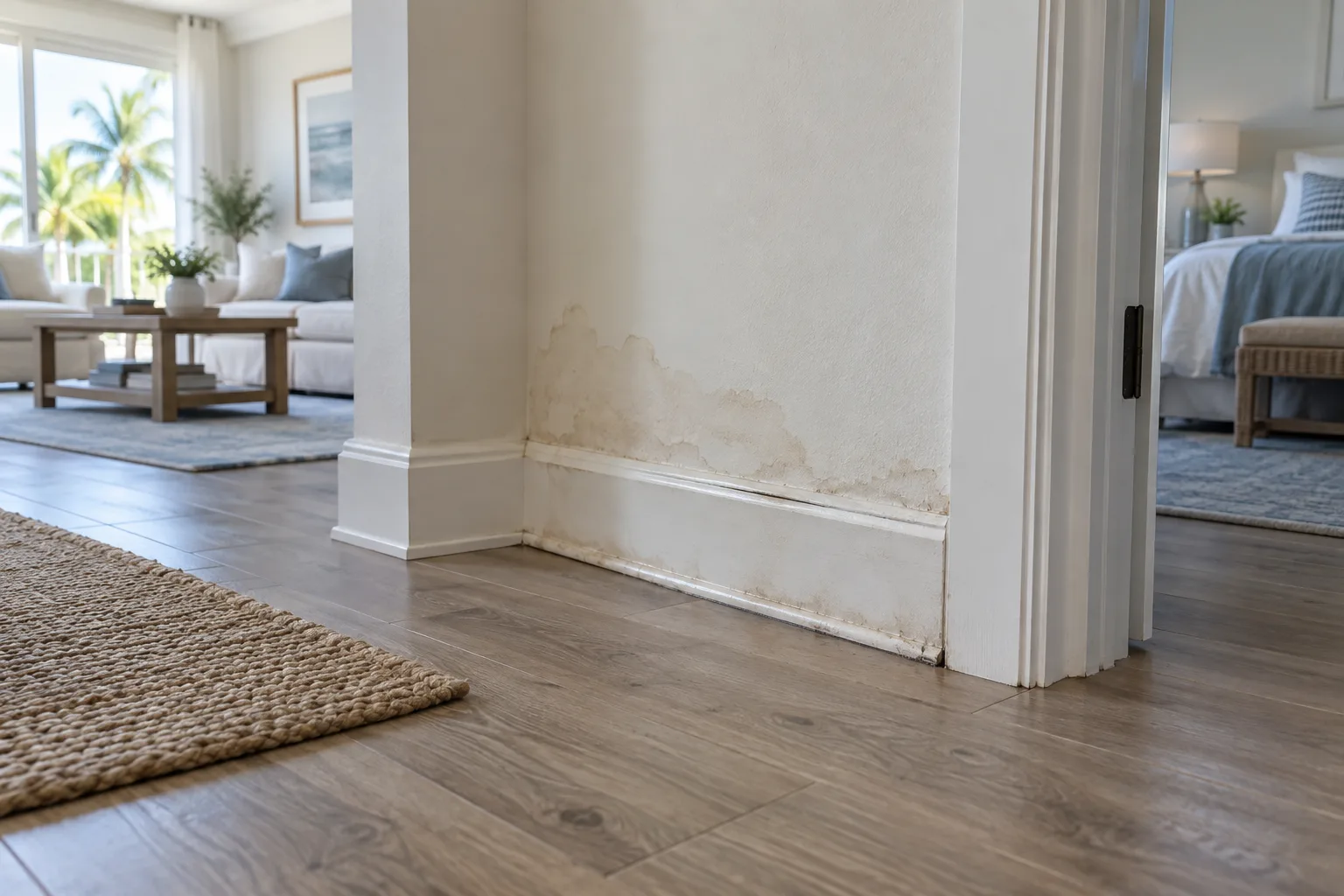
Before the adjuster arrives
An insurance claim for water damage usually moves faster when the adjuster can see a clear record. Florida consumer guidance asks policyholders to make reasonable emergency repairs to prevent further damage and to keep documentation of what they did. In practice:
- Stop the source or have a plumber stop it, and keep the plumber’s written findings.
- Photograph every affected room, wide and close up, before drying or demolition when it is safe to do so.
- Save receipts for water extraction, drying equipment and temporary repairs.
- Keep removed materials, or photos of them, until you know whether the insurer wants to see them.
- Write a short timeline: when you noticed the water, what you saw and whom you called.
Tell the adjuster where the water came from
The cause matters. Water from a burst supply line, an appliance, a roof opening and rising flood water can fall under different parts of the policy, and flood damage generally requires separate flood insurance. Describe the source as precisely as you know it, and say so when you do not know. “Water was coming from under the dishwasher on Monday night” is more useful than a guess about how long a leak has existed.
During the inspection
The adjuster assigned by your insurer works for the insurance company. Be courteous and factual:
- Walk through each affected area you can safely reach, including closets, cabinets and the ceiling below a leak.
- Point out damage that is hard to see, such as swollen baseboards, damp drywall or warped flooring.
- Ask what other documents the adjuster needs and the deadline to send them.
- Ask when you will receive the estimate and who your contact is going forward.
Do not agree to an amount during the visit. Ask for the estimate in writing so you can review it.
Timelines the insurer must follow
Under section 627.70131 of the Florida Statutes, the insurer must begin investigating within 7 days after receiving proof-of-loss statements and, for residential claims, complete any physical inspection within 30 days after receiving them. It must send you a copy of any detailed estimate within 7 days after its adjuster generates it, and pay or deny the claim, in whole or in part, within 60 days after receiving notice of the claim unless factors beyond its control prevent it.
Review the estimate line by line
Compare the insurer’s estimate with your photos and your contractor’s itemized scope. Common gaps in water damage claims include:
- Rooms or closets left out entirely
- Low quantities of drywall, baseboard or flooring
- Drying and mitigation work not included
- Contents such as furniture or stored items not listed
- Matching of flooring or cabinets that continue into undamaged areas
List each difference with the record that supports it and send it to the insurer in writing. If you find more damage later, Florida allows a supplemental claim within 18 months after the date of loss.
When water damage insurance claim assistance helps
Some water claims are simple. Others involve hidden damage, several rooms, a condo association or an estimate that leaves out work. A licensed public adjuster represents the policyholder: reviewing the policy, documenting the damage, preparing an estimate and communicating with the insurer. RicardoPA offers a free initial evaluation by phone or Zoom, in English or Spanish. Call 305-394-8090.
Frequently asked questions
Should I let the insurance adjuster inspect before I repair water damage?
Make reasonable emergency repairs to stop further damage right away, and document them. Ask the insurer before starting permanent repairs so it has a chance to inspect.
What should I tell the adjuster about a water leak?
Say where the water came from, when you first noticed it and what you did next. If you do not know how long the leak existed, say that instead of guessing.
What if the adjuster’s estimate leaves out water damage?
List each missing room or item, match it to a photo or contractor estimate, and ask the insurer in writing to explain how it evaluated that item.
General information only, based on Florida law at the date shown. It is not legal advice, and initial guidance does not replace an evaluation by a licensed public adjuster.